Start with the purchasing decision in front of you: prepare an RFQ for the delivered form, agree receipt checks, or check a grade, finish or material document. Each task links to the relevant guide or reference.
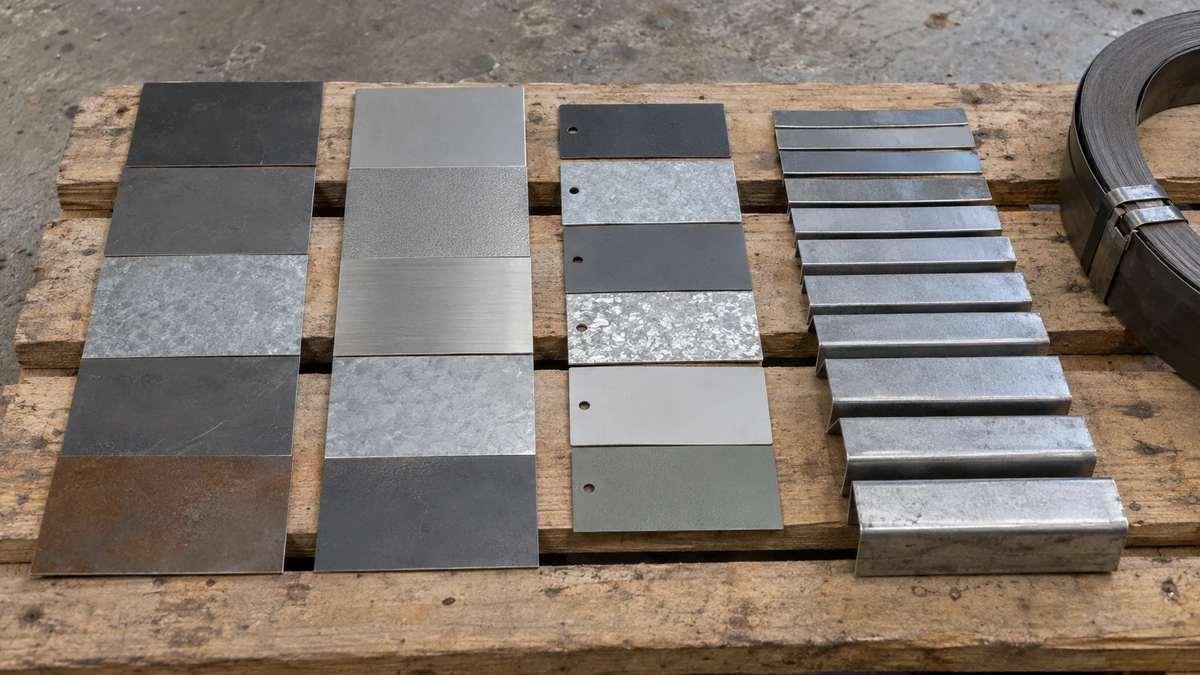
Representative view: the reference tables this hub links to, side by side and flat: grades, finishes, coating codes and gauge.
01 · RFQ and Receipt
Prepare an RFQ and Receipt Checklist
Choose the form that will be delivered. Use its guide to state the sourcing route, finished dimensions and acceptance requirements before comparing quotations.
Plan dry storage, package handling and cut-edge checks before installation or fabrication.
02 · Technical References
Check Grades, Finishes and Documents
Use these references after identifying the product form and delivery condition. Keep a designation comparison separate from the specification you will put on the order.
Q235B is defined in a GB standard and S235JR in an EN standard: what a comparison between them can settle today, what it cannot, and who has to approve the result.
Read BSSA stainless grade cross-reference rows against EN 10088 steel numbers, AISI grades, and UNS numbers, with the limits of cross-reference stated.
Q235 is a name out of GB/T 700:2006, assembled under a designation standard of its own; the letter at the end is the part of it that decides what gets tested.
Make export packing an agreed order requirement: identify the route, handling steps, protection, marking and the evidence to record at dispatch and arrival.
Compare complete material, coil configuration, included documents and named delivery basis before deciding which supplier quote meets the purchase requirement.
Use the purchase order, shipment documents and material identity to organize a coil receiving check; record exceptions before moving or processing the lot.
Start with the intended use, then name the manufacturing and coating route, finished section and acceptance evidence before asking for a pipe or tube quote.
Describe telescoped turns, stepped edges or loose winding on an identified steel coil, preserve safe evidence and seek authorized handling and order disposition.
Assemble unit masses, footprints and handling points, check floor and balance limits, name the securing parties and plan the destination unload before booking.
Specify the bundle, subpack and piece identifiers a steel order needs, where each mark goes, and how it stays tied to the PO line and certificate after splitting.
Plan a mixed steel container by PO line: written feasibility, a package-to-line map, load order from the receiving split, per-line documents and receipt checks.
Put an FOB and a CIF steel offer on one cargo and rule basis, then see who books carriage, who insures, where risk passes and which documents to request.
Compare compliant steel offers on landed cost with blank cost lines marked by who pays, broker-checked customs lines, owned loss allowances and an uncertainty register.
Map each package or piece in a mixed steel shipment to its PO line, heat or lot, certificate and storage location, and hold any row that does not match.
Turn an assembly drawing into separate inside, outside and end-condition terms, with clear inspection and packing requirements for a stainless pipe order.
Locate stainless weld heat tint, assign cleaning responsibility and set service-specific inspection and repair evidence before accepting pipe or an assembly.