China SPCC Steel Coil Supplier
ZIVO STEEL is a steel supplier: SPCC coil is arranged from partner factories against the specification you send, and on this route that specification is written in the vocabulary of one Japanese standard. This page sets out what the grade symbol fixes, which fields finish the order line, and what has to come back on the certificate.
SPCC
Grades
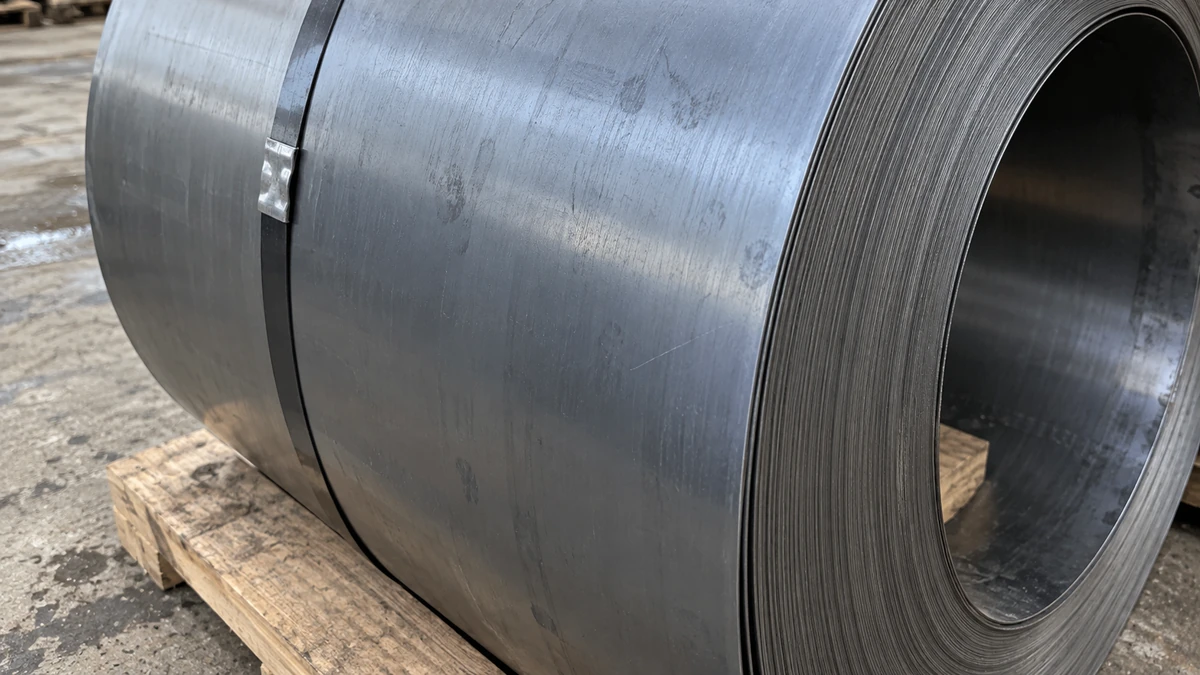
Representative view: sPCC cold rolled coil, the surface smooth and lightly oiled.
SPCC Coil From ZIVO STEEL
ZIVO STEEL trades steel; it does not roll it. There is no mill, no cold rolling line and no warehouse floor behind this page. SPCC coil is arranged from partner factories against what you specify, which is why the specification is what the rest of the page spends its time on.
An enquiry that says SPCC has named a grade symbol and nothing else yet. The symbol belongs to JIS G 3141:2021, the Japanese standard for cold-reduced carbon steel sheet and strip, and that standard also settles the temper and the surface the coil is delivered in, the permitted variations on its dimensions and the wording a certificate has to use. The table below is the route ZIVO arranges; the dimensions are settled for the order against the material actually offered rather than published as a band. Everything after it turns that route into an order a factory can accept without filling a blank in for you.
SPCC Coil Specifications
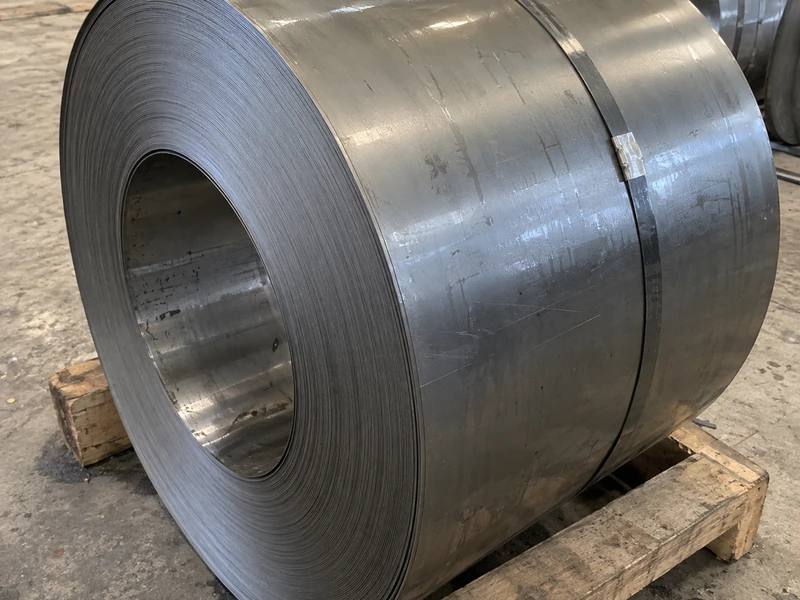
One line, because ZIVO arranges one route here: SPCC as cold rolled coil. Thickness, width, coil inner diameter and coil weight are not published against it; each is fixed when the order is placed, checked against the material actually offered.
The SPCC designation belongs to JIS G 3141:2021, and that text is what gives each symbol its meaning; a grade symbol quoted without a standard and edition behind it gives a factory a name to match and no text to match it against. Say which product standard and edition your acceptance runs on and what the certificate has to carry; both are checked against the lot proposed and confirmed in the quotation.
The width in that line is a coil width. Narrower strip is a slitting question rather than a coil width, and it is answered when you say what the line at your end takes.
| Grade | Process |
|---|---|
| SPCC | Cold rolled coil |
SPCC in the JIS Cold Rolled Standard
SPCC is a grade symbol, and a grade symbol is the smallest part of what an order on this route has to say. The symbol sits inside JIS G 3141:2021, the Japanese standard for cold-reduced carbon steel sheet and strip, whose own scope takes in sheet and strip of not less than 30 mm in width and includes cold-rolled strip in coil under 600 mm wide as well as sheet cut from that coil. It settles two things at once: the grade means what that standard says it means, and the rest of the order line is defined in the same place.
That standard keeps those decisions apart on purpose, and its own contents page says where each one lives. The grade symbol, and the thickness it applies to, are clause 4.1. The temper grade, and the symbol that stands for it, are clause 4.2. The surface finish is clause 4.3. An order carrying the grade symbol alone has answered the first of the three and left the other two to whoever makes the coil.
It also keeps its dimensions at home. The dimensional tolerances are clause 7.3 and the shape requirements are clause 8 — flatness at 8.1, camber at 8.2, squareness at 8.3 — so on this route there is no second dimensional standard to name beside the grade. That is worth knowing before somebody asks you for one.
What this page will not do is reprint those clauses. They are the standard's own text, and they are read from the edition your order names. What ZIVO does instead is write the standard and its edition into the order and ask the factory to write the same pair onto the certificate, so the two documents can be laid side by side and checked against each other rather than against a recollection of what was meant.
SPCC Temper Designations
Temper is the field that decides whether a part bends or cracks, and on this route it carries a symbol of its own. JIS G 3141:2021 defines a temper grade and the symbol that stands for it at clause 4.2, and that symbol is written beside the grade symbol on the order line. It is not a description of the coil after the fact; it is an instruction about how the coil is finished, and it is what the factory certifies against.
| What the order line carries | Where it comes from |
|---|---|
| The grade symbol | Clause 4.1 of JIS G 3141:2021, which pairs a grade symbol with the thickness it applies to |
| The temper symbol beside it | Clause 4.2 of that same standard, read in the edition on the order |
| The delivery condition in plain words | You, from what the part does after it leaves the uncoiler |
| The measured result | The certificate, reported against the symbol that was ordered |
Plain words are enough to open an enquiry. Say whether the coil goes straight into a press, through a roll former, or onto a line that only cuts and stacks it. ZIVO settles which temper symbol expresses that condition against the edition governing the order, before the order is placed, rather than leaving it to be read off a commercial description afterwards.
Getting the field wrong is expensive in a way that shows up late. A coil ordered harder than the part needs tears at the first tight radius; a coil ordered softer than the tooling was built around wanders on the roll former and comes off out of shape. Neither fault is visible on the outside of a coil, and neither is an argument that can be won after the fact if the field went out blank.
SPCC Surface Designations
Surface is the other symbol JIS G 3141:2021 defines, and the one most often missing from an enquiry. It has a clause to itself at 4.3 and a field to itself on the order, and it decides what the coil looks like when the wrapping comes off and how the steel behaves under whatever goes on top of it afterwards.
| Order field | What it settles | Where the wording comes from |
|---|---|---|
| Surface finish | Appearance, and how the surface takes paint, powder or plating downstream | Clause 4.3 of JIS G 3141:2021, in the edition on your order |
| Oiling | Whether the coil arrives with an oil film or dry | The order, as a decision separate from the finish |
| Acceptance | How a disagreement about appearance gets settled | A reference sample agreed and named before the order |
Two habits are worth breaking here. The first is quoting a finish code borrowed from another steel family: the finishes used on stainless flat product are named in stainless standards and describe a different surface made a different way, so a code lifted from there is not a surface designation for cold rolled carbon coil, however often it appears in a trade table. The second is treating the oil film as packing. Oil protects the coil on the water and then has to come off, or be run through, at your end; a line that degreases before forming and a line that will not have a wet coil in the building are two different orders.
Then ask for the surface condition to appear on the certificate next to the grade and the temper. A certificate that names the grade and stops leaves the field it was quietest about exactly where it started.
Have a Specification Ready?
Send what you already know, such as grade, finish, size or quantity. Inquiries are answered within 2 hours.
How to Write an SPCC Order
A quotation needs the grade, finish, thickness, width, length and quantity. On this route the word finish opens into two fields of its own, and the grade is incomplete until the standard stands beside it. The list below is the order line in the sequence a factory reads it, and what ZIVO sales agrees with you before the order is held on file for that shipment.
- The grade symbol, with its standardSPCC on its own names a steel and no text. Write it as SPCC to JIS G 3141:2021, so the factory knows which edition the symbol is read from and the certificate has something to be checked against.
- The temperCold rolled coil is supplied full hard, annealed, and half hard. Name which of the three the part needs; which standard temper symbol that condition maps to is settled against the governing standard at order.
- The surface finishA field of its own, not a consequence of the grade. Say what the surface has to look like and what goes on top of it afterwards, and ask for the condition to travel onto the certificate.
- Oiled or dryWritten into the order, not into the packing note at the end. The crossing, the storage at your end and what your line does before forming decide it between them.
- Thickness, width, length and quantityGive the thickness and width your line needs; they are checked against the material offered rather than taken from a published band. The permitted variations on both come from clause 7.3 of JIS G 3141:2021 itself rather than from a dimensional standard of its own, so the grade standard and the tolerance standard are one document here. Give the quantity in tonnes where your planning works that way; one coil, at least 3 t, is where an order starts.
- What the coil has to fitGive the coil inner diameter and the coil weight your uncoiler, crane and floor accept; both are settled for the order against the material offered. A coil that will not fit the line is a coil that gets handled twice.
- The documents it has to arrive withName them while the enquiry is open rather than asking afterwards. The certificate has to carry the standard with its edition, the grade, the temper and surface condition, and the measured results against them.
- How the line reads end to endSPCC, JIS G 3141:2021, temper, surface finish, oiled or dry, thickness by width, quantity, coil inner diameter and coil weight, documents. Written in that order, the line leaves nothing for anyone to assume.
Your Drawing Says DC01, the Offer Says SPCC
An enquiry written for DC01 sometimes comes back quoted as SPCC. That is not a spelling to correct with a pen. The two designations are named in two different standards, ordered with different symbols and certified against different tables, so an offer written in the other one is a proposal to move the order onto another route.
The two are commonly compared, and a comparison is a cross-reference rather than an equivalence: it requires full specification review and stays subject to the approval of whoever owns the specification. None of that is settled on this page. What this page settles is the JIS side of it — SPCC to JIS G 3141:2021, on the line in the table above. The comparison itself, and the checks that have to happen before anyone acts on one, are set out on the page linked below.
Inspection and Documents
The certificate is where an order line turns back into evidence, and three of its lines do the work: the standard with its edition, the grade with the temper and surface condition it was made to, and the measured results against them. A document that names the grade and stops has answered the easiest question on the order.
Ask for the mill original rather than a retyped sheet, and ask for it in the words the order used. The agreed specification is held on file for that shipment, so acceptance at the far end is a comparison between two documents instead of a conversation about what was intended.
- Shipment documentsA mill test certificate (MTC) and a packing list travel with every shipment.
- The certificate is the mill originalWhat arrives is the certificate the mill issued, not a retyped version of it.
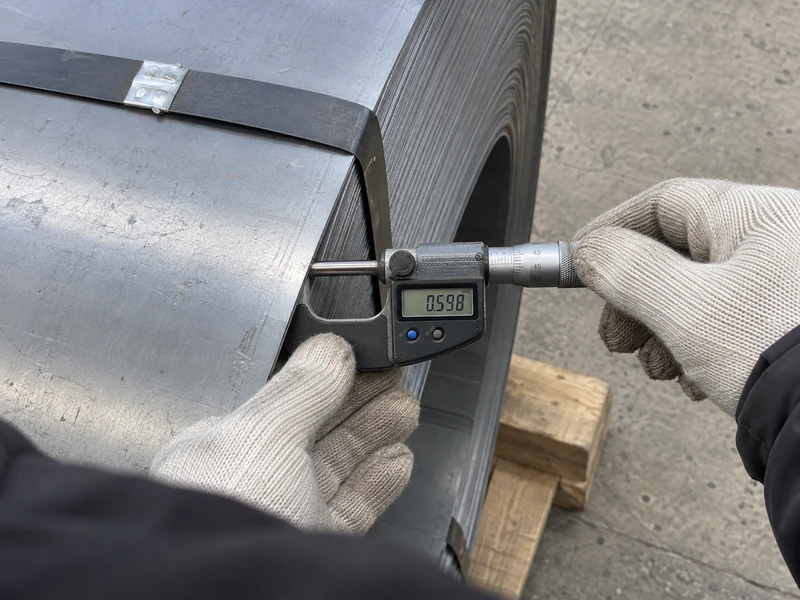
- Checks before the coil leavesThickness, width, surface, weight, packing and labels are checked by ZIVO before shipment.
- Third-party inspectionAn inspector such as SGS or BV is accepted; the inspection cost is paid by you.
- Coil label photosPhotos of the coil labels can be provided, so what shipped can be tied back to what was ordered.
- The specification on fileWhat was agreed with ZIVO sales before the order is kept on file, and it is the document the certificate gets read against.
Packing and Shipment
Ports of loading are Qingdao and Tianjin.
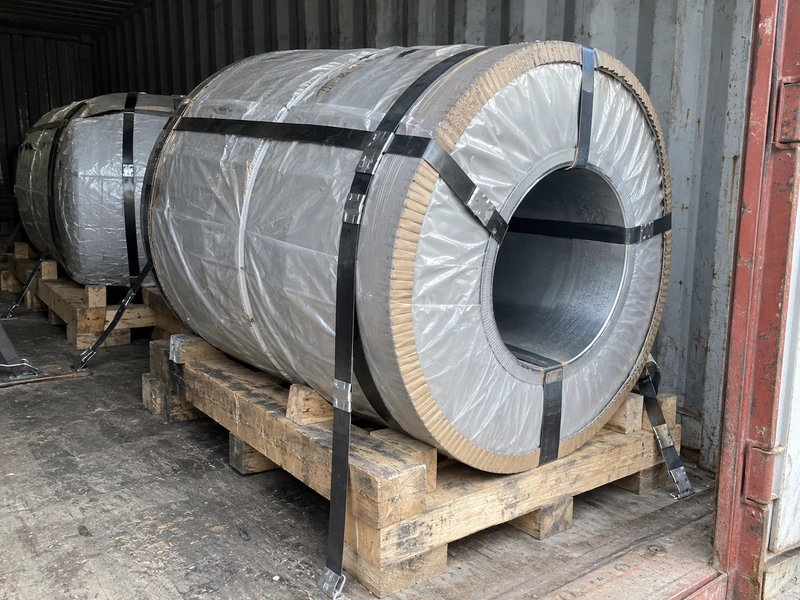
A cold rolled coil arrives in the condition it was packed and protected for, and the fields that decide that condition are settled before it is made: whether it ships oiled or dry, and what goes around it. For a carbon coil the packing, the edge protection and the rust prevention are agreed with ZIVO sales as part of the specification and held on file with the shipment they belong to.
What that decision needs from you is short. How long the coil will sit before it runs, whether it waits under cover or outside, and what your line does with an oil film. Those three answers turn the oiling field from a formality into a choice, and they cost far less to give now than to argue about once the coil is on the water.
Frequently Asked Questions
Neither is a default, and the answer comes from the part rather than from the grade. Cold rolled coil is supplied full hard, annealed, and half hard, and which of the three an order runs to follows what happens to the steel after it is uncoiled: pressing and drawing want the softer end, a line that only cuts and stacks can take the harder one. Which standard temper symbol each condition maps to is settled against the governing standard at order, so plain words are enough in the enquiry; ZIVO sales fixes the symbol with you before the order is placed.
Yes, because nothing else in the order line implies it. The surface finish is a clause of the standard and a field of the order, separate from the grade and separate from the temper, and a line that leaves it blank hands the decision to whoever makes the coil. Say what the surface has to look like and what goes on top of it downstream; the symbol that expresses it is fixed against the edition your order names, and it belongs on the certificate as well as on the order.
As part of the specification, before the order rather than at the packing stage. Oiling is a decision about the voyage and about what your line does with an oil film, so it is settled together with the packing and the rust prevention and then written down. What ZIVO sales agrees with you is kept on file for that shipment, which is what lets the coil that arrives be checked against the condition that was ordered.
Four things together: the standard with its edition — JIS G 3141:2021 on this route — the grade symbol, the temper and surface condition the coil was made to, and the measured results against them. Each shipment comes with a mill test certificate (MTC) and a packing list, and the certificate supplied is the mill original rather than a retyped copy. A coating of detail on the packing list does not make up for a missing edition on the certificate.
Sizes are not published as a band on this route. Thickness, width, coil inner diameter and coil weight are fixed when the order is placed, against the material actually offered. Narrower material is a slitting question rather than a coil width, so send what your line takes and it is answered with the quotation.
One coil, at least 3 t. Quotations are priced in US dollars, FOB Qingdao, and payment is 30% T/T deposit with the 70% balance before shipment. Lead time is confirmed once the specification and the quantity are fixed, which is one more reason to send the temper, the surface and the dimensions in the first message rather than the third.
Tell Us What You Need
Send the product form, grade, finish, thickness, width, length and quantity. Inquiries are answered within 2 hours.
Send Your Inquiry
Name, email and your inquiry are all that is needed. Add a WhatsApp number if you prefer to chat.
- Email: henry@zivosteel.com
- WhatsApp: +86 15668396618
- Address: 2F, Vanke Center, Lixia District, Jinan, Shandong, China
- Hours: Monday to Saturday, 8:00-18:00 (China time)