China DC01 Steel Coil Supplier
ZIVO STEEL supplies DC01 as cold rolled coil, arranged from partner factories against the European standard the name comes from. This page covers what the designation places the steel in, the forming requirements that sit behind it, the point at which a part needs a different number in the series, and how the order line is written.
DC01
Grades
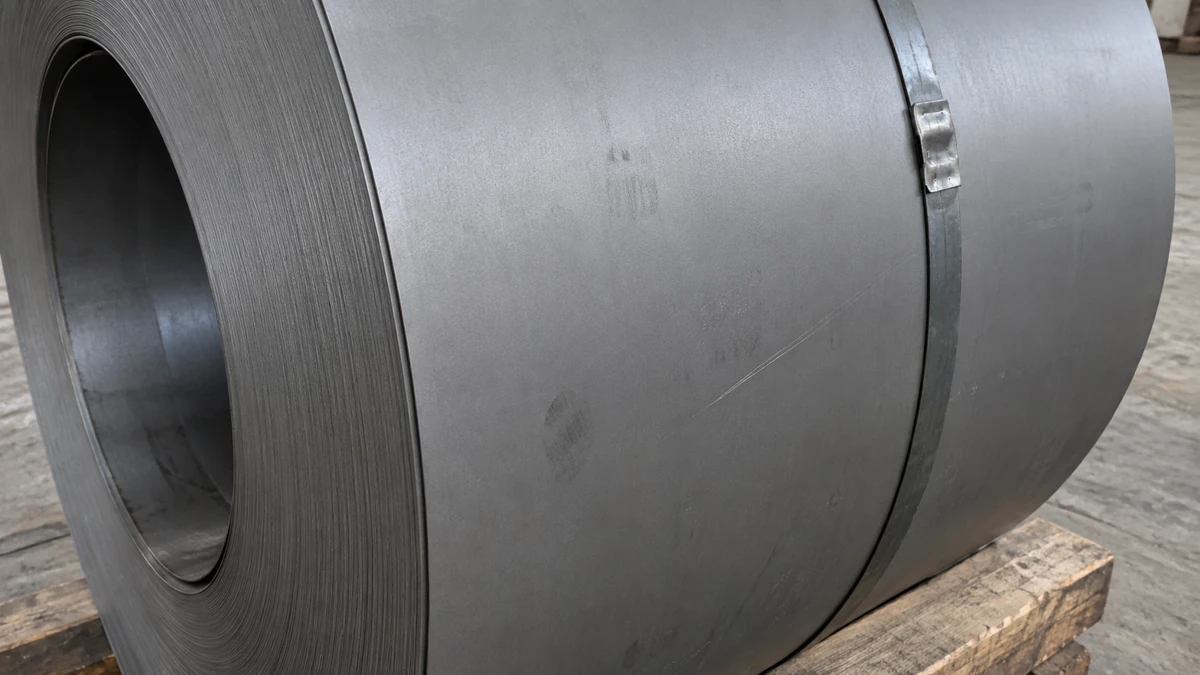
Representative view: dC01 cold rolled coil, the surface smooth and matte grey.
DC01 Coil From ZIVO STEEL
ZIVO STEEL is a supplier and rolls nothing itself: the coil is made by partner factories and arranged against what you specify. Nothing written here comes from a rolling line.
DC01 is the first number of a European series of cold rolled low carbon grades meant for cold forming, and that is the useful thing to know before ordering it. The series is arranged by how much forming the steel will take, so the number somebody wrote on the drawing is a forming decision that has already been made — and the question worth asking early is whether it was made against the part you are producing now. The line below is the route ZIVO arranges; the thickness and width are settled for the order against the material actually offered rather than published as a band.
DC01 Coil Specifications
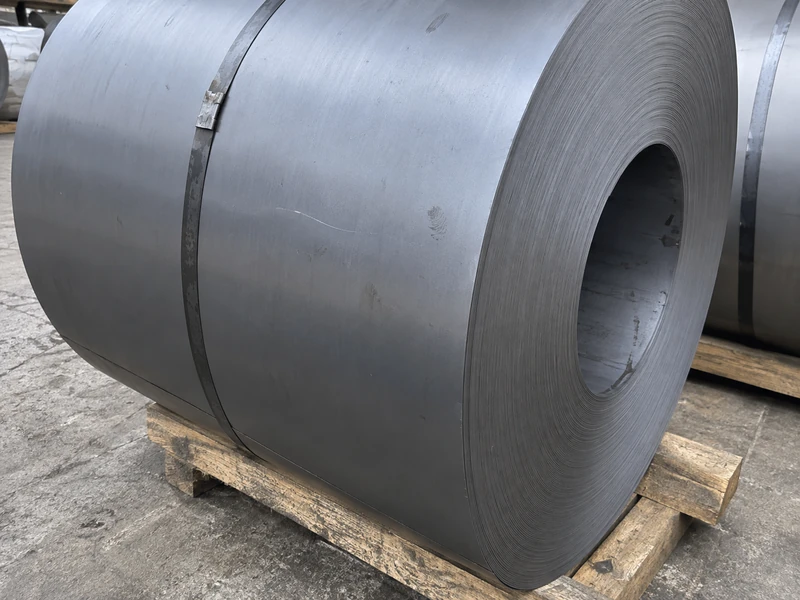
One line: DC01 as cold rolled coil. Thickness, width, coil inner diameter and coil weight are not published against this route; each is fixed at the order, checked against the material actually offered.
The DC01 designation comes from EN 10130:2006, and that text is what defines it. A drawing saying DC01 and no more has named a steel without naming the text behind it, which leaves the certificate with a word to repeat and no requirement to be measured against — so state the product standard and edition your acceptance runs on and what the certificate has to carry, and both are checked against the lot proposed and confirmed in the quotation.
DC03 and DC04 are supplied as well, and they sit on the cold rolled coil page rather than this one. They are separate grades with lines of their own, not a wider reading of this line.
| Grade | Process |
|---|---|
| DC01 | Cold rolled from hot rolled coil |
DC01 in the EN Cold Rolled Standard
A DC designation is built to be read. The letters say what kind of product the grade belongs to — cold rolled flat product, low carbon, intended for cold forming — and the number after them places that grade in a series ordered by forming capability. The name therefore carries a class rather than a chemistry, and the part of it worth arguing about is the number.
Around the grade name, EN 10130:2006 sets the rest of the delivery conditions: the surface quality the product comes in, the surface finish, and the state the material is delivered in. Every one of those is an ordering choice in its own right and none of them follows from the grade name. An order that carries only a grade name has quietly delegated three decisions. The scope of that standard is drawn around the product rather than around the grade — cold rolled uncoated low carbon steel flat products, rolled 600 mm wide and over, 0.35 mm thick at the minimum and 3 mm at the maximum unless the enquiry and the order agree otherwise, delivered as sheet, coil, slit coil or cut lengths.
Dimensions are settled somewhere else again on this route. The permitted variations on thickness, width and shape come from EN 10131:2006 rather than from the grade standard, and that one runs over the same bounds — 0.35 mm at the minimum, 3 mm at the maximum unless otherwise agreed — while leaving out cold rolled strip narrower than 600 mm. So a complete EN order names one standard for what the steel has to be and another for how close to size it has to arrive. An enquiry that names only the first has left the second to the factory's house practice.
None of those tables are reprinted on this page. They belong to the standards themselves and to the editions your order names. What goes into the order from ZIVO's side is the standard with its edition, so the certificate can be read against the same text you specified rather than against a later one that moved the requirement.
Forming Requirements Behind a DC01 Order
The reason to name a DC number instead of a thickness and a price is that EN 10130:2006 attaches forming-related requirements to it. Those requirements are what a certificate is checked against, and they are the whole difference between a grade name and a specification.
| What the requirement covers | Why the order cares | Where it is settled |
|---|---|---|
| Tensile properties | How far the steel goes before it tears | The requirement tables of EN 10130:2006, read in the edition your order names |
| Forming behaviour | Whether the part comes off the tool intact | The same table, read for the number that was ordered |
| Ageing | Whether the steel still behaves as tested after months in storage | EN 10130:2006 where it applies, and the order where a storage period matters |
| Thin-gauge conditions | Thin material does not behave like thick material | The standard's own conditions on the requirement, by thickness band |
Two working notes go with that. Some of these requirements apply as written and some apply only when they are agreed while the enquiry is open — a distinction the standard makes carefully and a quotation usually does not make at all. And figures for this grade circulate very widely on trade pages with no source attached to any of them; where acceptance turns on a number, take it from the edition named on your order and from the certificate in front of you, never from a page that cannot say where it got it.
The most useful thing in an enquiry is not the number but the work: the tightest radius, the deepest draw, the tooling it runs on and the thickness it runs at. That is the input that decides whether DC01 is the right number in the first place.
DC01, DC03 or DC04
The DC series is a ladder and the rungs are forming capability. DC01 stands at the bottom of it, which is the right place for bending, profiling and roll forming — work that shapes the steel without pulling it far. DC03 and DC04 are higher rungs, specified where the part is drawn rather than bent.
| What the part does | Where an order usually sits | What decides it |
|---|---|---|
| Bending, profiling, simple pressed shapes | The first rung of the series | The tightest radius the tool allows, and the springback you can live with |
| Drawing, but not deeply | A rung above | Whether the first rung cracks or thins at the corner on trial parts |
| Deep drawing, demanding tooling | Higher again | Trial results, or the specification the part was designed against |
Moving up the ladder is a change of grade, not a wider reading of the one you started with. Each number carries its own requirements, its own certificate line and its own price, so the move is made before the order on the evidence of what the tool does to the steel, rather than after the first coil fails on the press.
What this page will not do is pick the rung for you. Send the forming operation, the radius and the thickness with the enquiry, and ask about the number you think you need alongside the one on the drawing. The supply lines for the deeper-drawing grades sit on the cold rolled coil page.
Have a Specification Ready?
Send what you already know, such as grade, finish, size or quantity. Inquiries are answered within 2 hours.
How to Write a DC01 Order
A quotation needs the grade, finish, thickness, width, length and quantity. On this route one thing beyond those fields is worth sending anyway: what the part is formed into. That is the input that can tell you the order should carry a different number altogether, and it costs a sentence. The specification is agreed with ZIVO sales before the order and held on file for the shipment it belongs to.
- The grade with its standardDC01 to EN 10130:2006. The grade name identifies the steel and the standard with its edition identifies the requirements; a certificate needs both before it can be checked at all.
- What the part is formed intoThe tightest radius, the deepest draw, the tooling. Send it with the enquiry: it is the only field that can tell you the order should read DC03 or DC04 rather than this grade.
- The delivery conditionCold rolled coil is supplied full hard, annealed, and half hard. Name the condition in plain words; which standard temper symbol it maps to is settled against the governing standard at order.
- Surface quality and surface finishTwo ordering choices, not consequences of the grade. Say what goes onto the steel afterwards — paint, powder, plating or nothing — and ask for the condition to appear on the certificate.
- Oiled or dryChosen against the crossing and against the line that will run the coil, and written into the order rather than into the packing note at the end of it.
- Dimensions and quantityGive the thickness and width the part needs, with the length and the quantity beside them; they are checked against the material offered rather than taken from a published band. The tolerances on those dimensions and on shape belong to EN 10131:2006, which is a different document from EN 10130:2006, so name both wherever your drawing fixes a tolerance. One coil, at least 3 t, is the minimum an order starts at.
- What the coil has to fitGive the coil inner diameter and the coil weight your uncoiler and your crane accept; both are settled for the order against the material offered rather than picked off a published range.
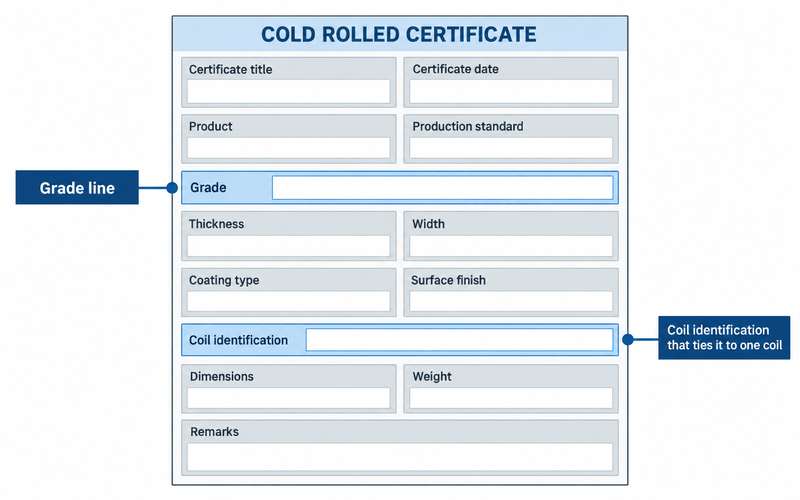
- The certificate lineAsk for the standard with its edition, the grade, the delivery condition and the measured results on one document. It is the only version of the order that outlives the e-mail thread.
Your Drawing Says SPCC, the Offer Says DC01
A drawing that reads SPCC against a quotation that reads DC01 is not two spellings of one order. Each designation is defined in its own standard, written with its own symbols and certified against its own tables, so an offer in the other one proposes to change which of them the order runs to.
The two are commonly compared, and a cross-reference is not an equivalence: acting on one requires full specification review and the approval of whoever owns the specification. This page answers the EN side alone — DC01 to EN 10130:2006, on the line above. The comparison, and the checks that come before anybody acts on it, belong on the page linked below.
Inspection and Documents
Documents are where an EN order proves itself. The certificate has to carry the standard with its edition, the grade, the delivery condition and the measured results, and the order has to have asked for all four in those words. Where acceptance rests on a forming-related requirement, say so while the enquiry is open, so the result is printed on the document instead of being inferred from the grade name.
The certificate that ships is the mill original. What ZIVO sales agreed with you is filed with the shipment, which is what lets the two be read side by side once the coil lands.
- Mill test certificate and packing listEvery shipment leaves with a mill test certificate (MTC) and a packing list.
- The mill originalThe certificate supplied with the shipment is the one the mill issued.
- Before the coil leavesZIVO checks thickness, width, surface, weight, packing and labels ahead of shipment.
- Third-party inspectionInspection by SGS, BV or another inspector is accepted; its cost is paid by you.
- Label photosPhotos of the coil labels can be provided on request.
- The agreed specification, keptThe specification agreed with ZIVO sales before the order stays on file, and the certificate is read against it rather than against anybody's memory.
Packing and Shipment
Loading is from Qingdao or Tianjin.
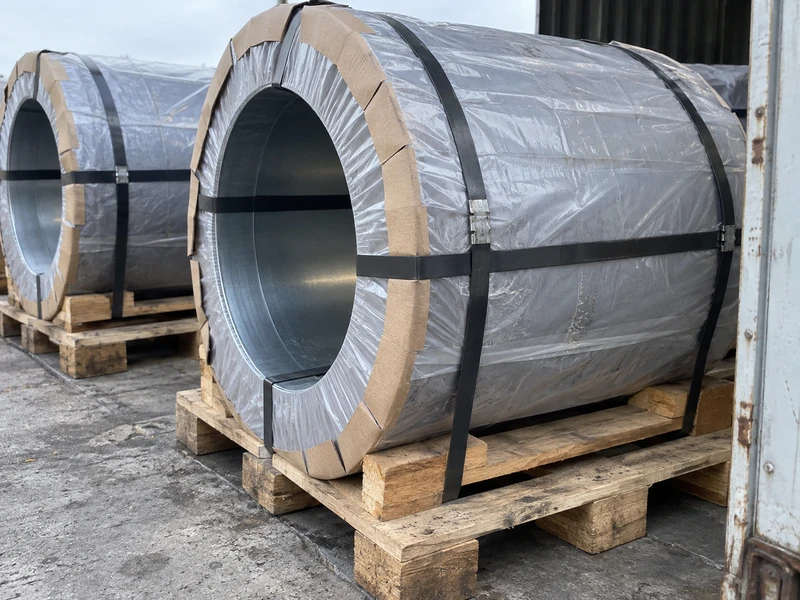
Two decisions travel with a cold rolled coil and both are taken before it is wrapped: whether it ships oiled or dry, and what protects it on the way. For carbon coil both are set with ZIVO sales as part of the specification and kept on file for that shipment, rather than taken from a house default that nobody wrote down.
What ZIVO needs from you in order to set them is short. The crossing, the storage at the far end, and what your line does with an oil film before the steel is formed. A coil that waits outside for a month is a different order from a coil that goes onto the press in week one, even where the grade line reads alike.
Frequently Asked Questions
It is a separate delivery condition of the same grade, and it is worth naming as one. Cold rolled coil is supplied full hard, annealed, and half hard; full hard material has not been softened after the last rolling pass, so it is specified for work that does not need much forming and refused by work that does. Which standard temper symbol the condition maps to is settled against the governing standard at order, so write the condition in plain words in the enquiry and let the symbol be fixed before the order is placed.
When the part is drawn rather than bent, or when trial parts crack or thin at a corner on the grade below. The series is arranged by forming capability, so the move up is a change of grade with its own requirements and its own certificate line, not a concession on the grade you started with. Send the forming operation, the tightest radius and the thickness with the enquiry; the deeper-drawing grades of this series are supplied too, on the cold rolled coil page.
As its own field, or as its own two fields. On this route the surface quality and the surface finish are ordering choices that the grade name does not imply, so an order that names only the grade has left them open. Describe what the surface has to look like and what happens to it downstream, ask for the agreed condition to be printed on the certificate, and keep the oiling decision separate from both of them.
The standard with its edition — EN 10130:2006 on this route — the grade, the delivery condition it was made to, and the measured results against the requirements the order named. Each shipment comes with a mill test certificate (MTC) and a packing list, and what arrives is the mill original. Where acceptance turns on a forming-related result, ask for it by name while the enquiry is open; a result nobody asked for is a result nobody prints.
Sizes are not published as a band on this route. Thickness, width, coil inner diameter and coil weight are fixed when the order is placed, against the material actually offered. Tell us the thickness and width the part needs and what your uncoiler takes, and they are checked before the quotation is written.
One coil, at least 3 t. Prices are quoted in US dollars, FOB Qingdao; payment is 30% T/T deposit with the 70% balance before shipment. Lead time is confirmed once the specification and the quantity are fixed, so the fastest route to a date is a complete first message: grade with its standard, delivery condition, surface, dimensions and quantity.
Tell Us What You Need
Send the product form, grade, finish, thickness, width, length and quantity. Inquiries are answered within 2 hours.
Send Your Inquiry
Name, email and your inquiry are all that is needed. Add a WhatsApp number if you prefer to chat.
- Email: henry@zivosteel.com
- WhatsApp: +86 15668396618
- Address: 2F, Vanke Center, Lixia District, Jinan, Shandong, China
- Hours: Monday to Saturday, 8:00-18:00 (China time)